
What High-Impact Marketing Campaigns Have in Common

For consumer brands serious about growth, better marketing is about getting more value from the investment you’re already making.
Marketing today involves multiple channels, agencies, contractors, and internal teams, each with different areas of expertise and responsibilities.
The challenge is getting all of those pieces to work together.
In this video, I break down what it takes to build more cohesive and effective marketing campaigns, so that every part of your marketing plan works together to deliver stronger results.
Watch the Video
Watch the 9-minute video or read the summary below.
A Closer Look
1. Start with strategy, not tactics
It's easy to jump into conversations about advertising, social media, creators, PR, email, retail activation, and other tactics. But those decisions should come after you've established the strategy.
Starting with a shared strategic foundation gives every partner a common point of reference and helps ensure that individual activities contribute to the larger campaign.
2. Establish the four strategic inputs
Before moving into execution, align on four things:
Business Objective: What does the initiative need to accomplish for the business?
Target Audience: Who are you trying to reach?
Consumer Insight: What do you understand about that audience that should inform the work?
Umbrella Idea: What is the central idea that brings the campaign to life?
Together, these inputs provide the foundation for the decisions that follow.
3. Build the connective tissue
One of the biggest differences between a collection of marketing activities and an integrated campaign is the connective tissue between them.
Your advertising, PR, creators, social media, email, retail, and other channels shouldn't operate as separate initiatives. Each has a different role to play, but they should reinforce the same strategy and tell a consistent story.
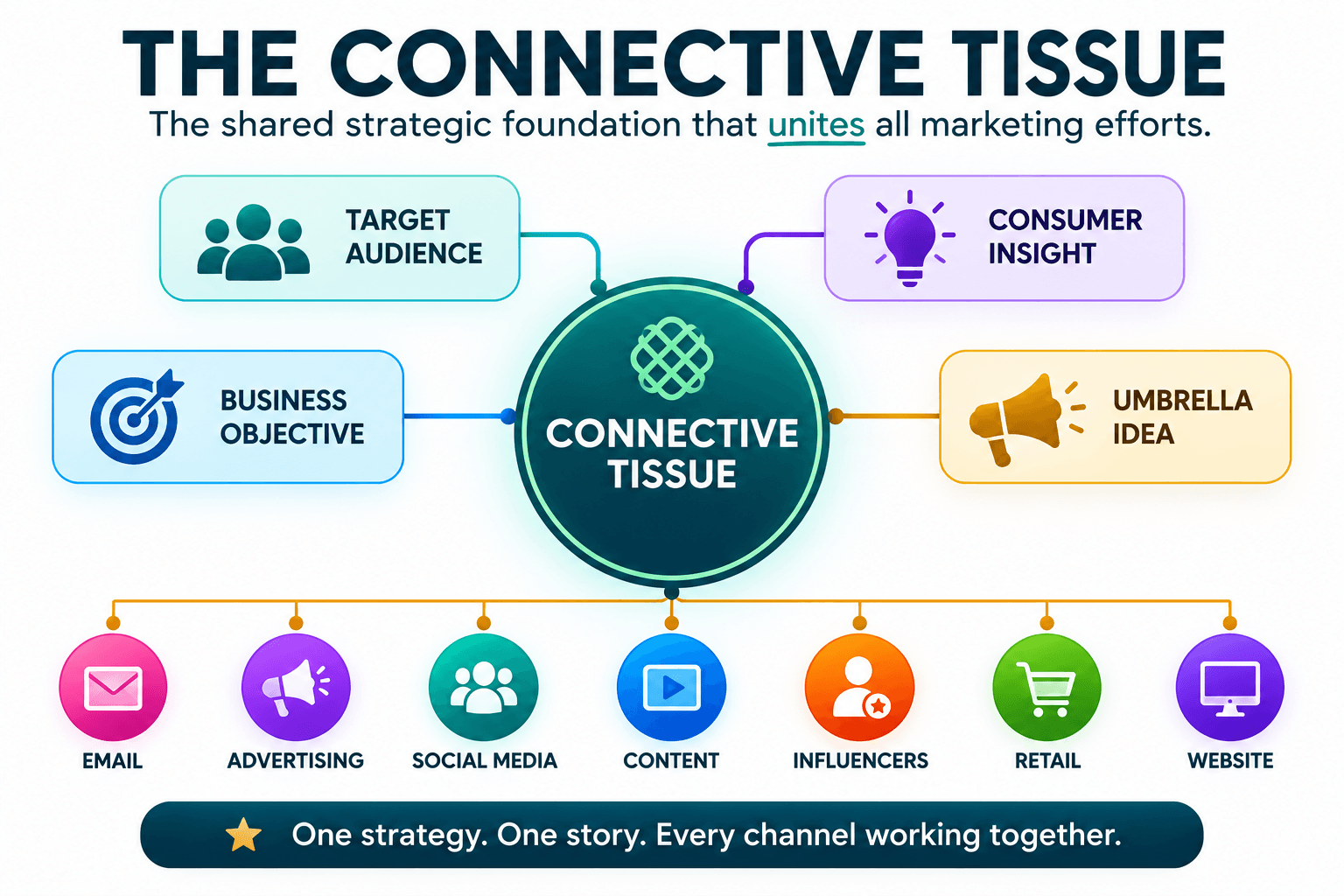
The goal isn't for every channel to look or behave exactly the same. It's for consumers to experience one cohesive campaign, regardless of where they encounter your brand.
4. Turn strategy into coordinated execution
Alignment shouldn't end once the strategy is approved.
Document the strategy in a clear marketing brief and bring the key people responsible for execution together early in the process. This gives internal teams, agencies, and other partners the same starting point while allowing each to contribute their expertise.
As creative is developed, plans evolve, and execution moves forward, establish a regular cross-functional meeting cadence. Use those meetings to reinforce the strategy, keep the work aligned, and ensure decisions continue to support the original objectives.
When everyone starts from the same strategy, the work naturally comes together.
Final Thoughts
Marketing effectiveness isn't just about how well each individual piece performs. It's about how well those pieces work together.
For emerging and growth-stage brands, that coordination can help you get more from the resources you're already investing in and create campaigns that feel cohesive, memorable, and impactful.
Watch on YouTube
Prefer watching instead of reading?
▶ Watch "Don't Launch Another Marketing Campaign Before Watching This" on YouTube.
